
St. Louis County Personal Property Tax: Pay, Receipt & Tax Waiver Help
A St. Louis County personal property tax task often starts with a vehicle registration problem: you need to find a bill, pay a balance, print a prior-year receipt, remove a vehicle you no longer owned on January 1, or prove that you did not owe tax at all.
The key is using the right county office. The Collector of Revenue handles bills, payments and receipts. The St. Louis County Assessor handles personal property accounts, declarations, vehicle records, valuation questions and statements of non-assessment.
Quick Answer: What Should You Do First?
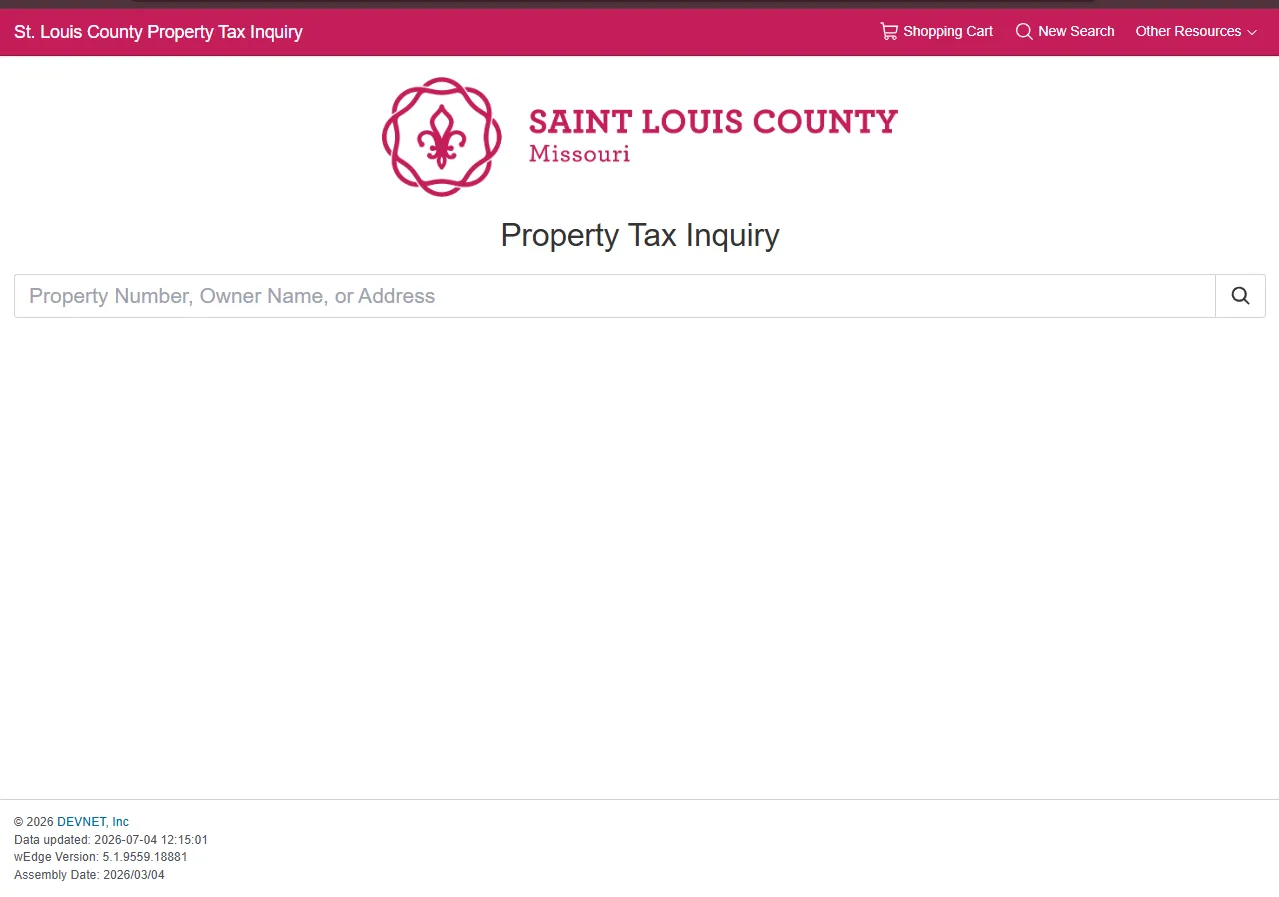
Start with the official tax lookup. Confirm the St. Louis County personal property account, taxpayer name, tax year, current balance and payment status. If the bill is correct, continue to the Collector’s payment route.
If the problem involves which vehicle is listed, what you owned on January 1, an incorrect value, a declaration or a tax waiver, stop before paying and use the Assessor route instead.
Do not start with the payment screen if you are unsure which vehicle or year is being taxed. Fix the account or assessment issue first.
Make Sure You Are Using St. Louis County, Missouri
Search results for “St. Louis personal property tax” can lead to three different jurisdictions. The City of St. Louis is independent from St. Louis County, and St. Louis County, Minnesota is an entirely different tax system.
Use this page if your Missouri personal property account belongs to St. Louis County.
City residents use the City of St. Louis Assessor and Collector of Revenue systems.
Minnesota personal property and real estate rules do not apply to this Missouri account.
Before paying: match the official government domain, taxpayer information and Missouri tax year. A payment made in the wrong St. Louis system will not create the St. Louis County receipt you need.
Collector vs Assessor: Which Office Handles Your Problem?
Start here for a current tax balance, online payment, delinquent balance, partial payment, payment posting and paid tax receipt.
Start here for personal property declarations, adding or removing vehicles, account ownership, January 1 property records, valuation and statements of non-assessment.
Use this route when you formally disagree with the Assessor’s personal property value, classification or assessment.
Use Missouri DOR for vehicle title and registration requirements. The DOR does not replace the county Collector or Assessor for St. Louis County property-tax records.
If the dollar amount is wrong because the vehicle or value is wrong, contact the Assessor or appeal body. If the correct bill simply needs to be paid or proven paid, use the Collector.
How to Look Up St. Louis County Personal Property Tax
The county operates separate tax-collection and assessment searches. Use the tax inquiry for the bill and payment status. Use the Assessor personal property search when you need deeper account, declaration or vehicle information.
- Open the St. Louis County Property Tax Inquiry.
- Enter the property number, owner name or address.
- Open the matching record.
- Confirm taxpayer, account and tax year.
- Review the live amount due and posted payment status.
- Only use the payment route after those details match.
Keep the personal property account number once you find it. It can make later receipt, declaration, waiver and payment questions much easier to resolve.
How to Pay St. Louis County Personal Property Tax
Payment belongs with the Collector of Revenue. Before checkout, verify the account, tax year, full balance and whether you need that year to show paid for a Missouri vehicle-registration task.
- Confirm the account number.
- Confirm the correct tax year.
- Review the full balance and any delinquent charges.
- Check whether a prior payment already posted.
- Read the current processor-fee disclosure.
- Save your payment confirmation.
Fee warning: Do not rely on an old flat fee or percentage from another article. The final payment screen and current county fee page should control your payment decision.
How to Print a St. Louis County Personal Property Tax Receipt
A payment confirmation proves that you submitted a transaction. A county tax receipt proves that the tax record shows payment. That distinction matters when Missouri vehicle registration requires prior-year tax proof.
If the account still shows a remaining balance, a partial-payment receipt may not solve a license-office problem that requires proof that the applicable year’s tax is paid.
Missouri License Plate and Vehicle Registration Proof
Missouri DOR generally requires a paid personal property tax receipt from your county of residence for the prior year when obtaining or renewing vehicle registration. For a two-year registration, prior-year requirements can extend to two tax years.
Use the St. Louis County receipt showing the applicable year’s personal property tax is paid.
Use the Assessor’s waiver process rather than trying to produce a paid receipt for a year with no tax assessment.
Missouri DOR can require proof for the previous two years when a two-year registration is involved.
Missouri DOR receipt rule: DOR guidance says acceptable paid-tax proof can include the county receipt, and the receipt should be in an owner’s name, list each vehicle owned and show that the tax was paid.
Confirm the exact tax year required, print the receipt or waiver, and keep a digital copy on your phone or in cloud storage as backup.
St. Louis County Personal Property Declaration
Missouri personal property tax is based on taxable property owned or controlled on January 1. St. Louis County’s declaration forms ask taxpayers to report the tangible personal property that existed on that assessment date.
For 2026, county declaration materials state that returns should be submitted by March 1 to avoid penalty. The declaration is not a tax-payment form.
Report taxable vehicles and similar personal property owned or controlled on January 1 as required by the county declaration process.
Businesses may need to report taxable equipment, furniture, computers, tools, machinery, business-owned vehicles and other qualifying assets.
A new St. Louis County resident may need to establish a personal property account using the Assessor’s new-resident declaration process.
If a vehicle was sold, traded, totaled or otherwise disposed of, keep records showing when ownership ended.
- Open the St. Louis County Assessor declaration page.
- Confirm the assessment year.
- Review what you owned or controlled on January 1.
- Add the requested vehicle or personal-property details.
- Do not send a tax payment with the declaration form.
- Save confirmation or a complete copy of the filed declaration.
If you bought a vehicle after January 1, the key question for that assessment year is not simply whether you own the vehicle today. The Assessor looks at what was owned or controlled on the statutory assessment date.
How St. Louis County Personal Property Tax Is Calculated
Missouri’s State Tax Commission explains that most personal property is assessed as a percentage of true value in money. Cars, boats and similar personal property are generally assessed at 33⅓% of market value.
- Assume the vehicle’s true value in money is $18,000.
- 33⅓% of $18,000 is approximately $6,000 assessed value.
- The local tax levies that apply to the taxpayer’s location are then applied to that assessed value.
- The final St. Louis County bill controls the actual amount owed.
Do not estimate the final tax from vehicle value alone. Local levy rates differ by taxing location, and other account factors can affect the bill.
Statement of Non-Assessment: When You Need a Tax Waiver
A Statement of Non-Assessment, commonly called a personal property tax waiver, is not the same as a paid receipt. It tells the Missouri license office that St. Louis County did not assess personal property tax against you for the relevant year.
The Assessor may request vehicle title or registration evidence showing your prior residence and vehicle ownership.
You may need title, Missouri title application or a bill of sale showing the purchase date.
The county’s waiver instructions may require a lease agreement or other registration documentation.
- Confirm which tax year the Missouri license office requires.
- Check whether St. Louis County assessed personal property tax to you for that year.
- Confirm where you lived on January 1 of that year.
- Gather the title, registration, lease, bill of sale or other documents that match your situation.
- Use the Assessor’s Statement of Non-Assessment process.
- Save the completed waiver with your registration records.
Wrong-county warning: If you lived in another Missouri county on January 1 of the required tax year, St. Louis County may not be the county that should issue your waiver.
St. Louis County Personal Property Tax Deadlines
There are several different deadlines in this system. The declaration deadline, payment deadline and assessment-appeal deadline are not interchangeable.
Personal property ownership or control is generally determined as of January 1.
2026 county declaration forms state that returns should be filed by March 1 to avoid penalty.
St. Louis County’s 2026 Board of Equalization form requires appeal forms and supporting evidence by this date.
The county’s 2026 pre-payment form says the finalized property-tax bill is mailed in November.
The county identifies December 31 as the statutory property-tax due date.
Interest and penalties can apply to balances remaining after the statutory deadline.
St. Louis County’s no-cost pre-payment enrollment program divides the prior year’s tax into estimated quarterly payments, with the final payment adjusted to the actual current bill.
- March 31
- June 30
- August 31
- December 31
The county states that taxpayers must be current to enroll, pre-paid amounts do not earn interest, and the pre-payment dates are not the statutory delinquency dates. The statutory balance is still due by December 31.
- Open the live tax inquiry.
- Choose the delinquent year.
- Check the updated amount rather than an old bill.
- Review current interest and penalty.
- Save proof of every payment.
If you need a paid receipt for vehicle registration, paying several days before December 31 gives you more time for processing and receipt availability.
How to Appeal a St. Louis County Personal Property Assessment
If you disagree with the Assessor’s value, classification or assessment, paying the bill does not correct the assessment. St. Louis County provides a Board of Equalization appeal process that includes separate supplemental forms for individual personal property and manufacturer/business personal property.
- Open the Board of Equalization page.
- Choose the property assessment appeal materials.
- Use the individual or business personal-property supplemental form that matches your account.
- Enter the account number and your opinion of fair market value.
- Attach supporting evidence before the deadline.
- Save filing confirmation and the later hearing notice.
Do not wait for a tax bill to appeal the value. Personal-property assessment appeals occur months before the December 31 tax-payment deadline.
Business Personal Property in St. Louis County
Business personal property is broader than a household vehicle account. The Assessor’s current business registration guidance includes items such as office equipment, computers, fixtures, furnishings, business-owned vehicles, tools, construction equipment and machinery.
Business-use computers, machines and related equipment can be reportable personal property.
Desks, shelving, furnishings and fixtures may appear on the business asset schedules.
Vehicles titled in the business name can be part of the business personal property return.
Construction equipment, machinery and other long-life trade or business assets may be reportable.
The Assessor’s current business registration guidance says inventory held for resale is not taxable personal property for this purpose, while parts and supplies can be taxable. Business property is generally valued using cost and standardized depreciation rules, then the statutory assessment ratio is applied.
- Confirm the business personal property account.
- Review assets owned or controlled on January 1.
- Separate disposed assets from property still in service.
- Review business-owned vehicles and leased property sections.
- File the declaration by the applicable deadline.
- Keep the asset schedule and filed copy.
Do not submit a blank declaration marked “same as last year.” Current St. Louis County business declaration instructions warn that an incomplete or unreturned declaration can result in an estimated assessment and potentially a higher tax bill.
Partial Payments and Pre-Payments
Partial payments and the county’s voluntary pre-payment program solve different problems.
A partial payment reduces the balance, but the year can remain unpaid until the full amount, including applicable delinquent charges, is satisfied.
Eligible taxpayers with current accounts can voluntarily spread estimated current-year taxes across the county’s pre-payment schedule.
If you need a personal property receipt to complete Missouri registration, verify that the required tax year actually shows paid rather than relying only on proof of a partial payment.
St. Louis County Personal Property Tax Troubleshooting
Likely cause: Assessor records still show the vehicle for the assessment date.
Next: gather sale, trade, title-transfer, total-loss or disposal records and contact the Assessor.
Likely cause: new purchase or account update was not reflected.
Next: check January 1 ownership and update the Assessor record if required.
Likely cause: you did not owe St. Louis County tax for that year.
Next: check whether you need a Statement of Non-Assessment.
Likely cause: processing delay, wrong account or failed transaction.
Next: keep the confirmation and contact the Collector before paying again.
Likely cause: vehicle value, prior balance, estimated assessment, local levies or late charges.
Next: identify whether the issue belongs to the Assessor or Collector before filing a dispute.
Likely cause: January 1 residence determines which county record applies to the assessment year.
Next: verify your January 1 residence before requesting a St. Louis County waiver.
Always identify whether the problem is a record/value issue or a billing/payment issue before contacting an office.
Documents Worth Keeping
Account number, owner name, current address, prior address and tax year.
Title, registration, purchase date, bill of sale, trade paperwork or disposal proof.
Tax year, balance, fee screen, transaction number and bank or card confirmation.
Paid tax receipt or Statement of Non-Assessment for the required year.
January 1 vehicle list, account details and supporting ownership records.
Assessment notice, valuation evidence, photos, sale records and BOE filing confirmation.
St. Louis County Personal Property Tax Terms
- Personal Property Account Number
- The identifier used to connect personal property assessment, bill, receipt and declaration records.
- Assessment Date
- January 1, the date used to identify taxable personal property ownership or control for the assessment year.
- True Value in Money
- The market-value concept used in Missouri property assessment before the statutory assessment percentage is applied.
- Assessed Value
- The value produced after applying the applicable Missouri assessment percentage to market value.
- Personal Property Declaration
- The annual report used to identify taxable tangible personal property owned or controlled on January 1.
- Statement of Non-Assessment
- The official tax waiver used when the taxpayer did not owe St. Louis County personal property tax for the required year.
- Paid Tax Receipt
- Proof from the Collector showing personal property tax was paid for a particular year.
- Board of Equalization
- The St. Louis County body that hears formal property assessment appeals.
Related CountyPropertyTaxes.us Guides
These live site pages are the most relevant supporting guides for this St. Louis County personal-property intent.
Official St. Louis County Personal Property Tax Links
St. Louis County Personal Property Tax FAQs
How do I look up St. Louis County personal property tax?
Use the official St. Louis County Property Tax Inquiry for bills, balances and payment status. Use the Assessor personal property search for assessment, vehicle and account details. Verify the account and tax year before paying.
When is St. Louis County personal property tax due?
The statutory property-tax due date is December 31. If a balance remains after the deadline, check the live account because interest and penalty may change the amount due.
When is the personal property declaration due?
St. Louis County’s 2026 declaration materials say returns should be submitted by March 1 to avoid penalty. The declaration reports taxable personal property based on the January 1 assessment date.
How do I print a personal property tax receipt?
After the payment posts, open the St. Louis County Print Tax Receipts page, locate the correct taxpayer and account, select the required tax year, then print or save the receipt.
What do I need for Missouri license plate renewal?
Missouri DOR generally requires proof that the applicable prior-year personal property tax was paid. Depending on the situation, that proof may be a paid county receipt or a Statement of Non-Assessment when no tax was owed.
What is a St. Louis County personal property tax waiver?
The formal name is Statement of Non-Assessment. It shows that you did not owe St. Louis County personal property tax for the specified year and can be used in qualifying Missouri vehicle-registration situations.
How is my vehicle value used to calculate personal property tax?
Missouri generally assesses cars, boats and similar personal property at 33⅓% of true value in money. Local tax levies are then applied to the assessed value. The official St. Louis County bill is the final amount due.
How do I remove a vehicle I sold?
Use the Assessor’s personal property process rather than the payment portal. Keep the bill of sale, title-transfer record, trade paperwork, insurance information or other evidence showing when the vehicle left your ownership.
What if I moved into St. Louis County after January 1?
The January 1 assessment date is important. Review the Assessor’s new-resident and Statement of Non-Assessment rules to determine which Missouri county record applies to the required tax year.
Can I make partial personal property tax payments?
Partial payments can reduce an outstanding balance, but a year may not show paid until the full amount is satisfied. If you need a receipt for DMV use, verify the paid-in-full status for the required year.
Can I pre-pay my St. Louis County personal property tax?
St. Louis County has a voluntary pre-payment program for taxpayers whose taxes are current. The county’s 2026 form lists estimated pre-payment dates of March 31, June 30, August 31 and December 31, with the final payment adjusted to the actual bill.
How do I appeal a vehicle or personal property assessment?
Use the St. Louis County Board of Equalization. The 2026 appeal materials require the appeal and supporting evidence by the second Monday in July and include supplemental forms for individual and business personal property.
Is this the same as City of St. Louis personal property tax?
No. St. Louis County and the independent City of St. Louis have separate government tax systems. This article applies to St. Louis County, Missouri.
Bottom Line
For St. Louis County personal property tax, start with the account lookup. Use the Collector when you need to pay, check the balance or print a receipt. Use the Assessor when the issue involves a vehicle record, January 1 ownership, declaration, valuation or Statement of Non-Assessment. If the assessed value is disputed, preserve the Board of Equalization deadline rather than waiting for the December tax bill.
Lookup Account Pay Tax Print Receipt Tax Waiver Declaration AppealMaterially reviewed for St. Louis County and Missouri personal-property rules: August 27, 2026.