
Chicago Property Tax Guide: Search Your Bill, Pay Safely & Check Exemptions
Chicago property tax can be confusing because the bill says “Cook County,” the home is in the City of Chicago, and several offices affect the final amount. The safest way to handle it is simple: verify the property record first, confirm the bill and installment, check whether escrow already paid, review exemptions, then use the official Cook County Treasurer or Assessor page only for the final action.
Quick Answer
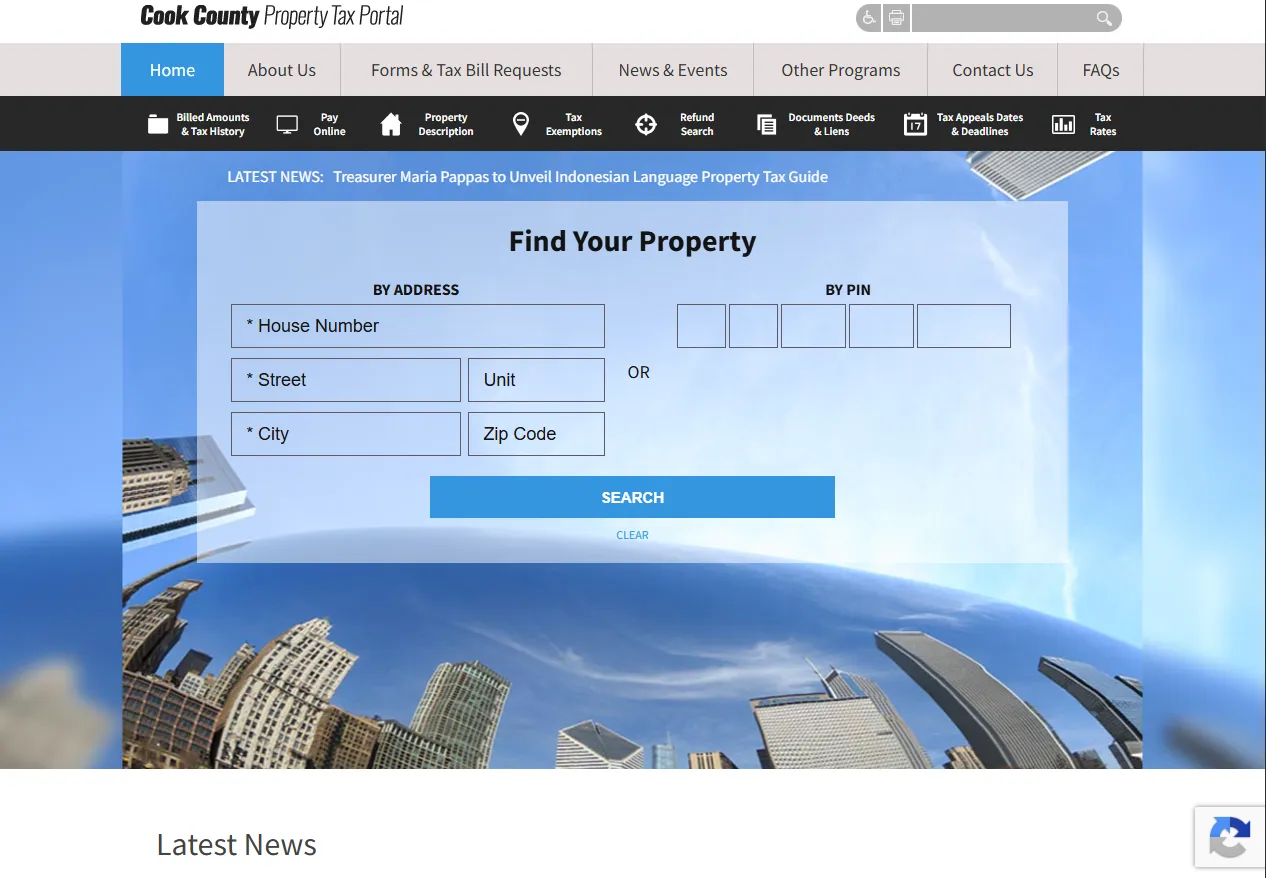
For Chicago property tax, start with the Cook County Property Tax Portal. Search by 14-digit PIN or property address, confirm the correct Chicago parcel, open the current bill or PDF copy, check tax year and installment, verify payment status, review exemptions or refunds, then pay through the Cook County Treasurer’s official payment route. Do not pay from an old PDF, search ad, owner-name guess, or mortgage escrow assumption until the live record matches.
Chicago Property Tax vs Cook County: Which Office Do You Use?
Chicago property owners often search for “Chicago property tax,” but the payment and bill system is mainly handled at the county level. The City of Chicago explains property-tax impact and local government context, while the Cook County Treasurer collects property taxes and the Cook County Assessor handles assessments and many exemption tasks.
| Task | Correct Office / Website | Why It Matters | Official Link |
|---|---|---|---|
| Pay a Chicago property tax bill | Cook County Treasurer | The Treasurer collects property tax payments for Chicago properties. | Treasurer |
| Search by PIN or address | Cook County Property Tax Portal | The portal connects Chicago property records, tax history, refunds, exemptions, documents and payments. | Property Tax Portal |
| Review exemptions or assessment | Cook County Assessor | Homeowner, senior, Senior Freeze, disability and veteran exemptions are Assessor-related topics. | Assessor Exemptions |
| Understand City of Chicago tax context | City of Chicago property tax explainer | Useful for understanding how City services, levies and taxing bodies connect to the larger bill. | Chicago Property Taxes |
| Appeal assessed value | Assessor or Board of Review | Value disputes are not solved by simply paying the bill. | Board of Review |
Chicago Property Tax Help by Situation
Use this quick map if you want the right answer fast. Each situation below explains what to check before opening an official page.
| Your Situation | What to Check First | Best Next Step |
|---|---|---|
| Where is my Chicago property tax bill? | Search the Cook County property record by PIN or address. | Find the bill online |
| I want to pay Chicago property tax online | Confirm tax year, installment, due date, balance and escrow status. | Pay safely |
| I need the bill PDF or payment coupon | Open the correct year and installment before printing or mailing. | Read the PDF guide |
| My bill is higher than expected | Compare assessment, exemption history, EAV, tax rate and second installment. | Find why the bill changed |
| I think I paid twice | Compare owner payment, escrow payment and posted payment status. | Check refund options |
| I may qualify for a Chicago homeowner exemption | Review exemption history and filing eligibility. | Review exemptions |
Before You Pay: 7 Checks That Prevent Most Chicago Property Tax Problems
Most payment mistakes happen because the user pays before confirming the property record. These checks can prevent wrong-property payments, duplicate mortgage escrow payments, missed exemption problems and refund delays.
Where Is My Chicago Property Tax Bill?
If your paper bill is missing, late, damaged or sent to an old mailing address, search online instead of waiting. Chicago property tax bills can be checked through Cook County tools because Chicago property taxes are collected through the county system.
- Open the Cook County Property Tax Portal.
- Search by 14-digit PIN if you have it.
- Use property address search if the PIN is not available.
- Confirm the Chicago property address, parcel details, township, class, tax code and mailing address.
- Open the bill, PDF copy, payment status, tax history or refund/exemption information from the official record.
What the official property record can help you review
Review recent billed amounts and compare changes across years before assuming the bill is wrong.
Check the address, class, tax code, estimated value, assessed value, mailing address and other available property fields.
Useful if you paid twice, escrow paid after you paid, or an exemption/appeal correction changed the amount.
The record may point toward documents, deeds, liens, appeal timing and other property-tax history.
- Open the Treasurer’s electronic billing signup page.
- Enter the property and contact details requested.
- Watch for confirmation and check spam/junk if needed.
- When a bill is ready, download, save or print the PDF.
How to Search Chicago Property Tax by PIN, Address or Owner Name
The most reliable search method is the 14-digit Property Index Number, also called the PIN. Address search is helpful when you do not have the PIN. Owner-name searching is less reliable because names can change, records may be abbreviated, and properties may be held by trusts, companies, estates or other legal entities.
- Use the 14-digit PIN from a tax bill, mortgage statement, closing paperwork, deed or Assessor notice.
- If you do not know the PIN, use the Chicago property address.
- If the address search fails, simplify the street name and remove extra terms such as Street, Avenue, Boulevard, Place or Unit.
- Confirm the record before paying, filing, appealing or checking refunds.
| Search Method | Best Use | Risk to Avoid |
|---|---|---|
| PIN search | Best when you have a bill, payment coupon, escrow notice, deed, closing statement or assessment notice. | Typing the wrong PIN or using a PIN from a different parcel. |
| Property address search | Best when you know the Chicago property address but not the PIN. | Selecting the wrong unit, nearby parcel, similar street name or old address. |
| Owner-name clue | Only useful as a clue when researching ownership. | Paying or filing based only on a name match. |
How to Pay Chicago Property Tax Safely
Chicago property tax payment is handled through Cook County Treasurer payment options. Before paying, confirm the property, year, installment, amount due, due date and posted payment status.
| Payment Option | What to Know | Micro Steps | Official Link |
|---|---|---|---|
| Online bank account | The Treasurer lists no fee when paying from a checking or savings account. | Search property → choose installment → enter bank info → review amount → save confirmation. | Pay with bank account |
| Credit or debit card | Card payments include a third-party processing fee separate from the property tax amount. | Review fee → verify property → choose tax year → save receipt. | Pay with card |
| Mail payments should include the correct tax bill payment coupon. | Print bill → include coupon → write PIN if needed → mail early → keep proof. | Mail/in-person rules | |
| Chase Bank | A tax bill payment coupon is usually needed for Chase payment processing. | Bring coupon → confirm branch hours → pay with accepted method → keep receipt. | Pay at Chase |
| Community bank or Treasurer office | The Treasurer lists community bank and office payment routes among payment options. | Bring bill/coupon → verify accepted payment method → save stamped or printed proof. | Ways to pay |
Do not double pay: If your mortgage company normally pays through escrow, check the live payment status first. If you pay personally and your servicer also pays, you may need to wait for a refund process.
Chicago Property Tax Bill PDF, eBill and Payment Coupon
The PDF bill is the document that connects the payment to the right PIN, tax year and installment. If you mail a payment, pay at Chase, use a community bank or visit the Treasurer’s Office, the payment coupon can be important for correct processing.
- Open the Treasurer bill-copy route or the property portal.
- Search by PIN or property address.
- Open the correct tax year and installment.
- Download, save or print the PDF bill.
- Use the payment coupon when mailing or paying in person if required.
| PDF Area | Why It Matters | What To Do |
|---|---|---|
| PIN | Connects the bill to the correct Chicago parcel. | Match it with the property portal result. |
| Tax year and installment | First installment, second installment and prior-year bills can differ. | Do not pay until the year and installment are clear. |
| Amount due | Printed bills may not reflect later payments, refunds, corrections or interest. | Check live status before paying. |
| Payment coupon | Helps match mailed, bank or in-person payment to the right bill. | Include the coupon when required. |
| Exemption information | Missing exemptions can make the bill higher than expected. | Compare with exemption history. |
Chicago Property Tax Due Dates and Delayed Bills
Chicago property tax due dates follow the Cook County tax calendar. Bills are tied to tax year and installment, and second-installment timing can change when countywide processing is delayed.
- Open the Cook County Treasurer due-date page.
- Find the correct tax year.
- Confirm whether you are checking first installment, second installment or a prior-year bill.
- If the date passed, check payment status before paying again.
- If second-installment bills are delayed, use official county updates instead of older-year assumptions.
| Tax Year / Installment | Official Date or Status | What Chicago Property Owners Should Do |
|---|---|---|
| Tax Year 2025 First Installment | Wednesday, April 1, 2026. | Check posted payment, escrow status, bill PDF and balance. |
| Tax Year 2025 Second Installment | Cook County announced an expected two-month delay for second-installment bills. | Do not guess the date; watch official county and Treasurer updates. |
| Tax Year 2024 Second Installment | Monday, December 15, 2025. | Review unpaid balance, refund/correction or late status if unresolved. |
| Tax Year 2024 First Installment | Tuesday, March 4, 2025. | Use prior-year tools if an old balance remains. |
First installment vs second installment
The first installment is generally based on 55% of the previous year’s total tax amount. The second installment can reflect updated assessments, exemptions, tax rates, levies and corrections. That is why the second bill may look very different from the first.
Common Chicago Property Tax Mistakes to Avoid
These are the mistakes that most often create payment problems, refund delays or confusion for Chicago homeowners.
A saved bill can be outdated after payment posts, exemption changes, refund activity or escrow payment.
Owner names can be incomplete, outdated or listed under a trust/company. Use PIN or address.
Escrow collection and county payment posting are different. Check live payment status.
First installment is based on prior-year tax. Current-year rates and exemptions show more clearly on second installment.
Payment and refund questions usually go to the Treasurer. Assessment and exemption issues often start with the Assessor.
If the bill is missing, search online. Missing paper mail does not remove payment responsibility.
Why Did My Chicago Property Tax Bill Change?
A higher bill does not always mean one thing went wrong. Chicago bills can change because of assessment changes, local levies, tax rate movement, TIF-related effects, missing exemptions, escrow timing or second-installment adjustments.
| Possible Cause | Where to Check | What It Means | Next Step |
|---|---|---|---|
| Assessment changed | Assessor property record and assessment notice. | The property value, class or assessment data may have changed. | Review appeal options if value or property facts look wrong. |
| Exemption missing | Exemption history and PDF bill lines. | Homeowner, senior, Senior Freeze, disability or veteran savings may not be applied. | Use Assessor filing or Certificate of Error route if eligible. |
| Tax rate or levy changed | Tax code, taxing districts and rate details. | School, city, park, library and other taxing bodies can affect the final bill. | Compare with prior-year tax history and second installment. |
| Escrow or duplicate payment | Treasurer payment status and mortgage statement. | A lender payment may be pending, posted late, duplicated or missing. | Contact servicer only after checking official posted status. |
Chicago Property Tax Rate, EAV and Calculation Basics
There is not one simple Chicago property tax rate that explains every bill. The final amount depends on assessed value, equalization, exemptions, tax code, tax rate and the taxing districts connected to that property.
- Open your property record and identify the tax code or tax-rate area.
- Review estimated fair market value, assessed value and Equalized Assessed Value.
- Check which exemptions reduced the taxable value.
- Compare the current tax rate with prior-year history.
- If the value seems wrong, review appeal options instead of only calling the Treasurer.
The assessed value is part of the calculation before equalization, exemptions and rates are applied.
Exemptions generally reduce Equalized Assessed Value, not the bill dollar-for-dollar.
Chicago properties can be affected by city, school, park, library and other local government levies.
The second installment usually shows the current-year effect of rates, levies and exemptions.
Chicago Property Tax Offices: Treasurer vs Assessor vs Board of Review
Use the right office before you call, file or pay. Many Chicago tax issues take longer because the user starts with the wrong office.
| Your Need | Start Here | Why | Official Link |
|---|---|---|---|
| Pay tax or check payment status | Cook County Treasurer | Handles tax bills, payment routes, refunds and collection tools. | Treasurer |
| Search property overview | Cook County Property Tax Portal | Combines search, history, payment, refund, exemption, documents and rate information. | Property Tax Portal |
| Apply for or fix exemptions | Cook County Assessor | Handles many homeowner, senior, Senior Freeze, disability and veteran exemption topics. | Assessor Exemptions |
| Appeal assessed value | Assessor or Board of Review | Assessment/value issues are separate from paying the tax bill. | Board of Review |
| Understand City of Chicago context | City of Chicago explainer | Helpful for city-level tax context and why multiple taxing bodies affect the bill. | Chicago Property Taxes |
Chicago Property Tax Exemptions
Chicago homeowners may qualify for property tax exemptions through Cook County Assessor programs. Exemptions can reduce the taxable Equalized Assessed Value used to calculate the bill.
- Search your property and review exemption history.
- Compare the exemptions shown with your ownership and occupancy situation.
- Review eligibility for Homeowner, Senior, Senior Freeze, disability or veteran exemptions.
- Use the official filing portal when ready to apply or correct missing exemptions.
- For prior-year missed exemptions, review Certificate of Error options.
| Exemption | Who Should Review | What to Know | Practical Step |
|---|---|---|---|
| Homeowner Exemption | Owner-occupants using a Chicago property as a primary residence. | Assessor information describes a $10,000 EAV reduction. | Check whether it appears in exemption history. |
| Senior Exemption | Homeowners age 65 or older who own and occupy the property. | Review first-time application and renewal rules. | Confirm it appears after the qualifying year. |
| Senior Freeze | Senior homeowners meeting age, residence and income rules. | Freezes EAV, not the whole bill; tax rates can still affect the final amount. | Verify income-year rules and file when required. |
| Persons with Disabilities | Homeowners with qualifying disability documentation. | Assessor information lists an annual EAV reduction. | Prepare documentation and check renewal requirements. |
| Veteran exemptions | Returning veterans or veterans with qualifying service-connected disability status. | Different veteran exemptions have different eligibility and document rules. | Review official requirements before filing. |
Missing Exemption? Certificate of Error May Matter
If you were eligible for a homestead exemption in a previous year but it was not applied to a paid tax bill, the Certificate of Error process may help. This is especially important for Chicago homeowners who missed Homeowner, Senior, Senior Freeze, Persons with Disabilities or veteran-related exemptions.
- Search your property and review exemption history by tax year.
- Identify which exemption is missing and which year is affected.
- Review Certificate of Error eligibility.
- Gather ownership, occupancy, age, disability, veteran or income records.
- File through the official Assessor route if eligible.
Refunds, Duplicate Payments and Missing Senior Exemptions
Refund issues can happen when both a homeowner and mortgage company pay, a payment is duplicated, an appeal changes the amount, a missed exemption is corrected, a refund check goes uncashed, or PTAB/appeal activity creates a refund.
- Search the Chicago property by PIN or address.
- Check refund, overpayment and duplicate-payment tools.
- Review missing senior exemption tools if the owner may have qualified.
- Match any result to the correct tax year and installment.
- Save PDF bills, receipts, escrow records, appeal documents and refund proof.
Often happens when both the homeowner and mortgage company pay the same installment.
May happen when an exemption should have applied but did not appear on the bill.
Assessment appeal or PTAB activity can change the final tax amount.
Refund checks can go uncashed if the mailing address is wrong or the owner misses the notice.
If You Just Bought a Chicago Property
New Chicago property owners often get confused because the tax year may relate to a prior period, seller credits may appear on closing documents, exemptions may belong to the prior owner, and the mailing address may still need to be updated.
- Search the property by PIN from your closing documents.
- Compare the current bill with your closing statement and escrow setup.
- Check whether prior-owner exemptions still appear.
- Confirm the mailing address for future bills and refund notices.
- If your lender escrows taxes, verify whether the servicer will pay the next installment.
- Save the bill, closing statement, escrow disclosure and payment-status screenshot together.
New owner warning: A seller credit at closing is not the same as a posted county tax payment. Always check the official payment status.
Assessment Appeals and Deadlines
If your problem is the assessed value, property classification, building data or comparable value, paying the bill does not fix the issue. Assessment and value questions usually begin with the Cook County Assessor or the Board of Review.
- Search your property by PIN or address.
- Review assessment, property class and property details.
- Check whether an appeal was filed with the Assessor or Board of Review.
- Confirm current appeal windows before preparing evidence.
- Keep payment deadlines separate from appeal deadlines.
Important: An appeal does not automatically remove payment responsibilities. Check payment rules separately while the appeal issue is being handled.
Late, Delinquent, Tax Sale or Sold Taxes
If you see an old unpaid balance, do not ignore it. Delinquent property taxes can lead to interest, collection steps, tax-sale risk and more paperwork. If you received a tax sale or delinquent notice, verify the official record immediately.
- Search the property and identify the unpaid tax year.
- Check whether the taxes are current, delinquent or sold.
- If you received a tax sale notice, compare it with the official Treasurer record.
- Review payment plan information if you cannot pay in full.
- Keep proof of partial payments and follow-up confirmations.
- If taxes were sold, follow the official sold-tax instructions instead of guessing.
Urgent note: Delinquent or sold-tax situations can become time-sensitive. Do not rely only on an informational guide if a redemption deadline, foreclosure, bankruptcy or legal dispute is involved.
If Your Mortgage Company Pays Chicago Property Tax
Escrow does not mean the bill can be ignored. Your mortgage servicer may collect money monthly, but the tax payment still has to post to the official county record.
- Search the property by PIN or address.
- Open the current bill and payment status.
- Compare the due date with your mortgage escrow statement.
- Confirm whether the servicer’s payment posted.
- If it has not posted near the due date, contact the servicer and ask for proof of payment.
- Do not pay personally until you know whether a servicer payment is pending.
- Save escrow statement and official payment-status screenshot.
If the Owner Is Deceased or the Property Is in an Estate
Estate, probate, trust and inherited-property situations can affect mailing address, exemptions, refunds and payment decisions. Do not assume exemptions continue automatically or that a refund check will reach the right person.
- Search the property by PIN or address and confirm the mailing address.
- Check payment status and unpaid balances.
- Review whether exemptions still fit the current owner/occupant situation.
- Keep death certificate, probate documents, trust documents or representative paperwork if relevant.
- Contact the official office or a qualified professional if probate, foreclosure or tax-sale deadlines are involved.
Name and Mailing Address Problems
A wrong mailing address can cause missed paper bills, refund checks, notices or exemption-related mail. Use official Treasurer tools if the owner name or mailing address on the record is outdated.
- Search your property record first.
- Check the tax bill mailing address associated with the property.
- If wrong, use the official name/mailing address update route.
- Keep confirmation or a copy of the submitted change.
Before You Visit the Cook County Treasurer’s Office in Chicago
The Treasurer’s Office is located in Chicago. In-person visits are best for issues that cannot be solved online, mailed-payment problems, payment proof, refund confusion or complex account-specific questions.
PIN, Chicago property address, current bill or PDF copy, tax year and installment.
Confirmation number, bank record, canceled check image, branch receipt, postmark proof or escrow statement.
Refund letter, exemption application, Certificate of Error paperwork, appeal decision or Assessor correspondence.
Photo ID and documents showing your relationship to the property if the issue is owner-specific.
Who Should Get Official or Professional Help First?
This guide is for general navigation. Some property-tax situations are legal, financial or time-sensitive enough that you should not rely only on an informational article.
Get official or qualified help first if the property involves: probate or estate ownership, foreclosure, bankruptcy, active tax sale, sold taxes, trust ownership, business ownership, divorce dispute, ownership challenge, legal deadline, large delinquent balance, or a pending court matter.
Documents to Keep Before and After Payment
Good records make payment disputes, refund claims, missing exemptions, escrow issues and appeals easier to resolve.
PIN, property search result, PDF bill, payment coupon, exemption history, payment status and escrow statement.
Confirmation number, receipt, bank record, check image, branch receipt, postmark proof and email confirmation.
Ownership proof, occupancy proof, age proof, disability/veteran records, income documents for Senior Freeze and prior exemption history.
Both payment records, PDF bills, bank statement, escrow record, refund notice and year/installment details.
Related Property Tax Guides on This Site
These internal guides can help you understand general property-tax concepts before taking action on the official Cook County or Chicago source.
Official Chicago Property Tax Links
Use these official sources only when you are ready to complete a final action such as payment, filing, refund search, appeal review, bill download or account-specific verification.
Cook County Treasurer Office Map for Chicago Property Tax Help
For in-person help with payment status, mailed payment issues, refunds or tax bill questions, use the map below to locate the Cook County Treasurer’s Office in downtown Chicago. Check current office hours and accepted payment rules before visiting.
Cook County Treasurer’s Office
118 North Clark Street, Room 112
Chicago, IL 60602
Phone: 312-443-5100
Editorial Trust Note
CountyPropertyTaxes.us is an independent informational guide. It is not the City of Chicago, Cook County Treasurer, Cook County Assessor, Cook County Clerk or Cook County Board of Review. This page explains the process so users can understand their options before taking official action.
Information to re-check before action: due dates, second-installment delay status, payment methods, PDF/eBilling rules, coupon requirements, card fee language, exemption amounts, refund tools, assessment rules, office address and official links can change.
Chicago Property Tax FAQs
Who collects Chicago property taxes?
Chicago property taxes are collected through the Cook County Treasurer’s Office. The City of Chicago has property-tax information, but payment and bill tools are handled through Cook County.
Where is my Chicago property tax bill?
Search the Cook County Property Tax Portal by PIN or property address. The online record can help you find the bill, PDF copy, balance, tax history and payment status.
How do I pay Chicago property tax online?
Search the property, confirm the tax year and installment, check payment status, then use the Cook County Treasurer’s official bank-account or card payment route.
Can I pay Chicago property tax with no fee?
The Treasurer lists no fee for paying from a checking or savings account through the bank-account route. Card payments may include a third-party processing fee.
How do I search Chicago property taxes?
Use the Cook County Property Tax Portal and search by 14-digit PIN or property address. Then review tax history, exemptions, refunds, documents, tax rates and payment status.
Can I search Chicago property tax by owner?
The safer official search route is PIN or address. Owner-name information can be incomplete or outdated, so do not pay based only on a name match.
What is a Chicago property tax PIN?
The PIN is the 14-digit Property Index Number used to identify the parcel for tax bills, payments, refunds, exemptions and property history.
How do I read a Chicago property tax bill PDF?
Check the PIN, property address, tax year, installment, due date, amount due, payment coupon, mailing instructions and exemption information.
What is the tax bill payment coupon?
The payment coupon is the bill section used for mail, bank or in-person payments. It helps connect the payment to the correct PIN, tax year and installment.
What is the Chicago property tax rate?
There is not one simple citywide rate for every property. The bill depends on assessed value, Equalized Assessed Value, exemptions, local tax rate, tax code and taxing districts.
Why are Chicago property tax bills delayed?
Chicago property tax bills follow the Cook County tax system. If countywide second-installment bills are delayed, Chicago property owners should check official county and Treasurer updates.
What is the first installment?
The first installment is generally based on 55% of the previous year’s total tax amount. It may not fully reflect current exemptions, rates, levies or assessment changes.
Why did my Chicago property tax bill change?
The bill may change because of assessment changes, missing exemptions, tax rate or levy changes, delayed second-installment timing, escrow issues, refunds, corrections or appeal changes.
Which exemptions should Chicago homeowners review?
Review Homeowner, Senior, Senior Freeze, Persons with Disabilities, Returning Veterans and Veterans with Disabilities exemption topics if they may apply.
Can I get a refund for overpaid Chicago property taxes?
Possibly. Refunds may relate to duplicate payments, overpayments, appeal changes, corrections, missed exemptions, PTAB activity or uncashed checks.
What if my mortgage company pays my taxes?
Still check official payment status before the due date. Escrow collection does not always mean the county payment has posted.
What if I just bought a Chicago property?
Search by PIN, compare the bill with closing documents, check mailing address, confirm escrow setup and review whether prior-owner exemptions still appear.
Who handles Chicago property tax appeals?
Assessment and value issues may involve the Cook County Assessor or Board of Review. Payment status and refunds are generally Treasurer-related tasks.
Is CountyPropertyTaxes.us the official Chicago tax office?
No. This is an independent informational guide. Final payments, filings, refunds and appeals should be completed through official Cook County or City of Chicago systems.
Bottom Line
For Chicago property tax, confirm the Cook County property record first, read the bill carefully, verify the due date and payment status, check exemptions and refunds, then use the correct official Cook County or City of Chicago source for the final action.
Find My BillHow to PaySearch PropertyRead PDF BillOfficial Links