
What Is Property Tax? Definition, Calculation & Real-World Examples
Property tax is a recurring tax connected to owning property, most commonly land, homes and buildings. In the United States, the bill is usually administered by a local government or taxing authority rather than one national property-tax office.
The important part is that your bill is rarely just “home value × one rate.” The final amount can involve appraised value, assessed value, taxable value, exemptions, assessment caps, county and school rates, special districts, escrow payments and separate local charges.
Quick Answer: What Does Property Tax Mean?
Property tax is a tax imposed on property ownership. For homeowners, that usually means real estate such as a house, condominium, land or another building.
The amount can depend on property value, local assessment rules, exemptions or credits, local tax rates and other charges. In most cases, the final bill and payment are handled by a local government office.
When you need your actual amount due, move from the general definition to the official property record and local tax bill. A national explanation cannot replace your county or city account.
Property Tax vs Real Estate Tax vs Ad Valorem Tax
These terms can overlap, but they are not always identical in every state. Local terminology matters when you search a bill, file an exemption or appeal value.
A broad term for taxes connected to property. It can include real property and, in some jurisdictions, taxable personal property.
Usually refers specifically to tax on land and buildings such as homes, commercial real estate and vacant land.
A value-based tax. “Ad valorem” means the amount is tied to value rather than being one flat charge for every property.
In some jurisdictions, vehicles, boats, machinery or business equipment can be taxed separately from real estate.
Use the exact terminology shown by your local government. Searching “real estate tax” may lead to a different database than “personal property tax.”
Who Charges and Collects Property Tax?
There is no single office structure across the United States. State law usually establishes the framework, while local governments perform much of the valuation, billing and collection work.
Often determines property value, classification and property characteristics. This office may also administer exemptions.
Used in some states for property valuation, exemptions, appraisal notices and protest processes.
Often handles tax bills, payments, receipts, current balances and delinquent accounts.
May bill or collect municipal property tax separately from a county system.
May impose part of the tax rate even when another office sends one combined bill.
May review disputed assessments, classifications or exemption decisions under local law.
- Identify the state and county where the property is physically located.
- Decide whether the issue is value, exemption, bill, payment or appeal.
- Find the assessor/appraiser for value questions.
- Find the collector/treasurer or equivalent office for bills and payments.
- Confirm the official system before entering financial information.
The office that values your property may not be the office that receives the payment. Match the task to the office first.
How Property Tax Is Calculated
The exact formula varies by jurisdiction, but most systems move through several stages rather than multiplying the home’s sale price by one percentage.
The assessor or appraisal office estimates value under local law. It may differ from a sale price or online home-value estimate.
Some jurisdictions tax full value. Others apply a percentage or classification before calculating assessed value.
Homestead, senior, veteran, disability, agricultural or other relief can reduce taxable value or otherwise limit tax.
One or more rates may apply from counties, municipalities, schools, fire districts and other taxing units.
Teaching formula: a simplified model is taxable value × local tax rate = estimated property tax. Your jurisdiction may use assessment ratios, millage, equalization, caps, credits or special assessments, so the official bill remains the final source.
When comparing two tax bills, compare taxable value and all applicable rates—not just home prices.
Property Tax Calculation Example
This fictional example shows why assessed value and taxable value matter. The numbers are for learning only and are not tied to a real county.
Example: $350,000 Home
Step 1: $350,000 × 40% = $140,000 assessed value.
Step 2: Subtract an illustrative $20,000 exemption to get $120,000 taxable value.
Step 3: $120,000 × 1.25% = $1,500 estimated tax before any separate charges.
Do not copy these percentages into your own calculation. Assessment ratios, exemptions and rates differ by jurisdiction.
Use examples to understand the math, then substitute only figures verified from your own assessment record and tax authority.
How to Read a Property Tax Bill
A tax bill is more than an amount due. It helps you verify that the right property, year, values, exemptions and taxing units are being used.
Match the local identifier with the deed, prior bill or assessment record.
Confirm the year and installment before paying or comparing bills.
Review the value used under the jurisdiction’s assessment system.
Check whether expected homeowner or property-specific relief appears.
Identify the county, city, school or district rates shown on the bill.
Use the current live balance when available rather than relying on an old statement.
These may be different dates. Read the local instructions carefully.
Check whether a lender or servicer already paid before submitting a second payment.
Some bills contain charges that are separate from ordinary value-based property tax.
Use the dedicated Property Tax Bill Lookup guide when your main goal is finding a statement, balance, payment or receipt.
Why Two Similar Homes Can Have Different Property Tax Bills
Property tax does not follow home price alone. Even homes next door to each other can have different taxable values or tax treatment.
One owner may have homestead, senior, veteran, disability or another qualifying benefit.
Caps, reassessment cycles or ownership changes can produce different taxable values.
District boundaries can affect school, fire, library, drainage or other local levies.
Residential, agricultural, commercial and other property types can be assessed differently.
Additions, new construction or major property changes can affect assessment.
One parcel may have a charge for a local project or district that another parcel does not.
When researching a high bill, compare the assessment record, exemptions and district lines—not just the neighbor’s total payment.
Property Tax and Mortgage Escrow
With a mortgage escrow or impound account, the servicer may collect money each month for property taxes and insurance, then pay those bills when they become due.
This can make budgeting easier, but the homeowner should still check the tax record. Money being collected into escrow is not the same as a payment already posted to the local tax account.
- Open your latest mortgage or escrow statement.
- Find the property-tax disbursement or expected disbursement.
- Open the official local property-tax account.
- Confirm whether the payment has posted.
- If a deadline is close and payment is missing, contact the mortgage servicer and tax authority promptly.
Duplicate-payment risk: Do not automatically pay a bill yourself just because a copy arrived in the mail. Check whether the mortgage servicer already paid or has a payment pending.
Compare the tax authority’s posted payment with the servicer’s escrow record before sending a second payment.
Property Tax Exemptions, Credits and Other Relief
Property-tax relief is not one national program. Depending on the state and locality, savings may come through exemptions, credits, freezes, caps, circuit breakers, rebates, deferrals or special assessment rules.
May reduce taxable value, cap assessment growth or provide another benefit for a qualifying residence.
May involve an exemption, credit, freeze or deferral with age and sometimes income rules.
May depend on disability rating, service criteria, residence and surviving-spouse rules.
Can require specific federal, state, medical or income documentation.
Some states value qualifying farm, timber or conservation land under special rules.
Some programs provide relief when property-tax burden is high relative to household income.
Do not assume “exemption,” “credit,” “freeze” and “deferral” mean the same thing. Check the program name and filing office in your jurisdiction.
What If the Property Tax Bill Looks Too High?
First identify what changed. A high bill can come from a higher assessment, lost exemption, changed tax rate, special assessment, correction, delinquent charge or escrow issue.
Check: reassessment notice, property characteristics and appeal deadline.
Office: assessor, appraiser or appraisal district.
Check: eligibility, ownership change, renewal and application status.
Office: exemption or assessment office.
Check: county, school, city and special-district rates.
Office: taxing authority rather than payment processor.
Check: receipt, bank record and escrow disbursement.
Office: collector/treasurer and mortgage servicer if applicable.
- Check the appeal deadline immediately.
- Download the assessment notice and property record.
- Identify incorrect property details or value evidence.
- Gather comparable sales, photos, repair estimates or appraisal evidence when appropriate.
- File with the official assessment appeal body before the deadline.
An appeal normally challenges assessed value, classification or another assessment decision—not simply the fact that the tax bill feels expensive.
What Happens If Property Tax Is Not Paid?
Consequences vary by state and locality. Late tax can lead to interest, penalties, collection notices, liens, tax certificates, tax-sale procedures, foreclosure-related action or other enforcement.
The balance can increase after delinquency under local rules.
The tax authority may send additional statements, warnings or certified notices.
Some states use tax liens, certificates, deeds or other sale procedures.
Some jurisdictions offer installments, hardship arrangements, deferrals or redemption procedures.
Higher-risk situation: If the property is already connected to foreclosure, bankruptcy, probate, contested title, an estate, a tax sale or redemption deadline, use official sources immediately and consider qualified legal or tax guidance for the individual situation.
Use the dedicated Property Tax Due Dates guide for delinquency timing, mailing risk, postmark issues and proof-of-payment guidance.
Property Tax for a New Homeowner
The first tax year after buying a home can be confusing because closing prorations, old-owner exemptions, mortgage escrow and later assessment changes may all appear at different times.
Make sure the property identifier and mailing address are correct.
Seller tax prorations do not necessarily mean the tax office has already been paid.
Confirm whether the mortgage servicer will pay the next tax installment.
Benefits belonging to the prior owner may not automatically transfer.
A purchase or ownership change can affect value under some state systems.
Some jurisdictions issue supplemental, corrected or adjusted bills after closing.
Budget from your own expected taxable value and exemptions rather than assuming the seller’s old bill will remain unchanged.
Property Tax Examples by Property Type
Check assessment, homestead status, school/local rates, escrow and annual or installment due dates.
The unit generally has its own tax parcel. Property tax is separate from HOA or condominium dues.
The owner generally bears the property-tax obligation, while classification and assessment rules may differ from owner-occupied property.
Land can still be taxable even without a home or building.
Commercial classification, valuation and appeal practices may differ from residential property.
Some jurisdictions separately tax vehicles, boats, machinery or business tangible personal property.
Do not import owner-occupied residential rules into rental, business, agricultural or personal-property accounts.
Is Property Tax Deductible on Federal Taxes?
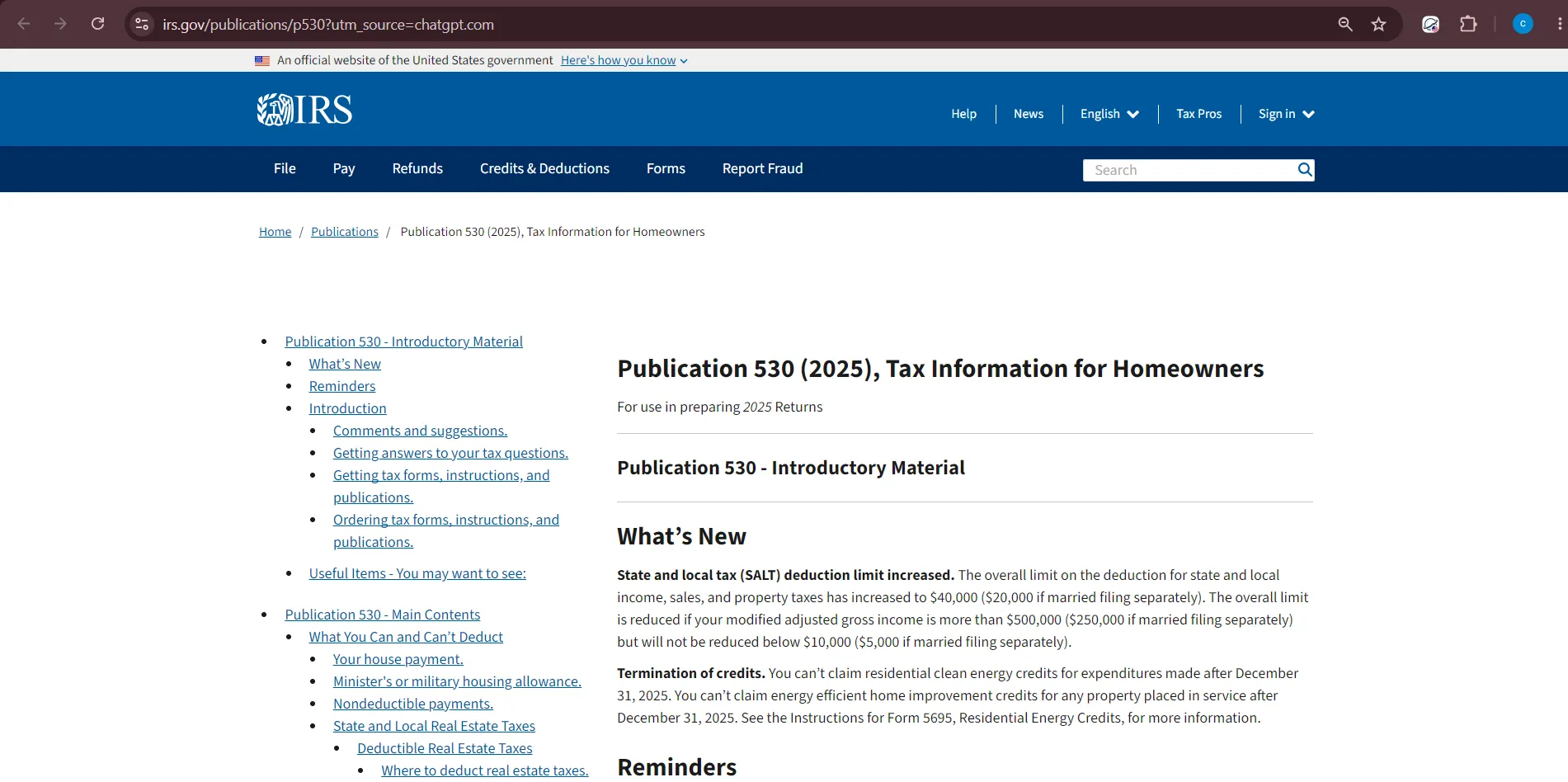
Local property-tax payment and federal income-tax deductibility are separate issues. Current IRS guidance allows certain state and local real property taxes to be included among itemized deductions when federal requirements are met.
Not every charge shown on a local bill qualifies as deductible real estate tax. Charges for specific services or some local improvements can receive different treatment under IRS rules.
- Keep the tax bill and proof of what was actually paid.
- If taxes were paid through escrow, review mortgage-servicer records.
- Separate general real property tax from itemized service charges or special-benefit assessments.
- Review the current IRS rules for the tax year being filed.
- Use qualified tax advice for rental, business, trust, estate or other complex property situations.
Do not treat the full amount at the bottom of a local tax statement as automatically deductible.
Property Tax Records Homeowners Should Keep
Save current, corrected and prior-year bills.
Keep receipts, confirmation numbers, bank records and mailed-payment proof.
Keep annual escrow analyses and property-tax disbursement records.
Save approval letters, applications and renewal confirmations.
Keep assessment notices, evidence, filed forms and decisions.
Keep settlement statements and tax-proration information from a purchase or sale.
Good records make escrow disputes, duplicate payments, exemption corrections, appeals and federal tax questions much easier to resolve.
Property Tax Terms to Know
- Property Tax
- A tax associated with owning taxable property, most commonly real estate.
- Market Value
- An estimate of property value under the jurisdiction’s valuation rules.
- Assessed Value
- The value produced after local assessment rules or classifications are applied.
- Taxable Value
- The value on which tax is calculated after applicable exemptions, caps or adjustments.
- Millage Rate
- A way some jurisdictions express property-tax rates, commonly in tax per $1,000 of taxable value.
- Parcel Number
- A local identifier for real property that may also be called APN, PIN, folio, account number or property ID.
- Homestead Exemption
- A jurisdiction-specific form of relief for qualifying owner-occupied property.
- Special Assessment
- A separate local charge that may be calculated differently from ordinary value-based property tax.
- Escrow Account
- An account managed by a mortgage servicer for expenses such as property tax and homeowners insurance.
- Delinquency
- The status of tax that has passed the local payment deadline and entered the late-payment process.
Official Sources for General Property Tax Help
Property Tax FAQs
What is property tax in simple terms?
Property tax is a tax connected to owning property, most commonly land, homes and buildings. Local governments generally calculate it using property value, local assessment rules, exemptions or credits and one or more local tax rates.
Is property tax the same as real estate tax?
For a home or other real estate, the terms are often used interchangeably. “Property tax” can be broader because some states and localities also tax certain personal property such as vehicles or business equipment.
Is property tax based on market value or assessed value?
It depends on local rules. Market or appraised value may be the starting point, while assessment ratios, classifications, caps and exemptions can produce a different assessed or taxable value used for the final calculation.
Why can two similar homes have different property tax bills?
Two similar properties can have different exemptions, assessment histories, ownership changes, classifications, taxing districts, special assessments or taxable values.
What is taxable value?
Taxable value is generally the value used for calculating property tax after the jurisdiction applies relevant assessment rules, exemptions, caps or other adjustments.
What is a millage rate?
Millage is one method of expressing a property-tax rate. A mill commonly represents $1 of tax for every $1,000 of taxable value, but always follow the calculation rules used by your local jurisdiction.
How often is property tax paid?
It varies. Some jurisdictions use one annual payment, others use semiannual, quarterly or installment schedules. Homeowners with escrow may contribute monthly to the mortgage servicer even though the tax authority receives payment less frequently.
Is property tax included in a mortgage payment?
It can be. If the mortgage has an escrow or impound account, the servicer may collect part of the expected tax with monthly payments and later pay the local tax authority.
What is a property tax exemption?
An exemption is one form of tax relief that can reduce taxable value or otherwise reduce the tax burden for qualifying property or owners. Homestead, senior, disability and veteran relief are common examples, but program rules differ by location.
Can I appeal my property tax bill?
Usually the formal appeal focuses on assessed value, classification, property facts or an exemption decision rather than simply appealing the total tax rate. Check the assessment notice and local appeal deadline quickly.
What happens if property tax is not paid?
Local law can impose penalties, interest, liens, collection actions or tax-sale procedures. The exact consequences and deadlines vary by jurisdiction.
Is every charge on a property tax bill deductible on federal taxes?
No. Federal deductibility depends on IRS rules. Certain state and local real property taxes may qualify when requirements are met, while some service charges and special-benefit assessments may receive different treatment.
Bottom Line
Property tax is a local tax system built around property value, assessment rules, exemptions and local rates. The number that matters is not always the home’s market value; the final bill can depend on assessed value, taxable value, district rates, special charges and homeowner relief.
Use this page to understand the terminology and calculation. When you need an actual balance, deadline, payment, exemption filing or appeal, continue to the dedicated guide and then the responsible official local office.
See Calculation Read a Bill Understand Relief Find Bill Guide Property Tax GuideMaterially reviewed and updated: August 27, 2026.