
Ohio Property Tax Guide: Find Your County Bill, Pay Safely & Check Exemptions
Ohio property tax is not paid through one single statewide payment page. Your county auditor usually controls the property record, value, parcel search and many exemption records, while your county treasurer usually handles tax bills, due dates, payment posting and delinquent collection. This guide explains the process clearly so you can understand what to check before using your county’s official portal to search, pay, appeal or file exemption paperwork.
Quick Answer
To handle Ohio property tax, first identify the county where the property is located. Search the property through the county auditor, fiscal officer or county property search page, confirm the parcel number and address, review the value and tax bill, then use the county treasurer’s official page for payment, due dates, receipts or delinquent-tax questions. For exemptions, valuation issues or appeals, start with the county auditor and the Ohio property tax relief rules that apply to the owner and property.
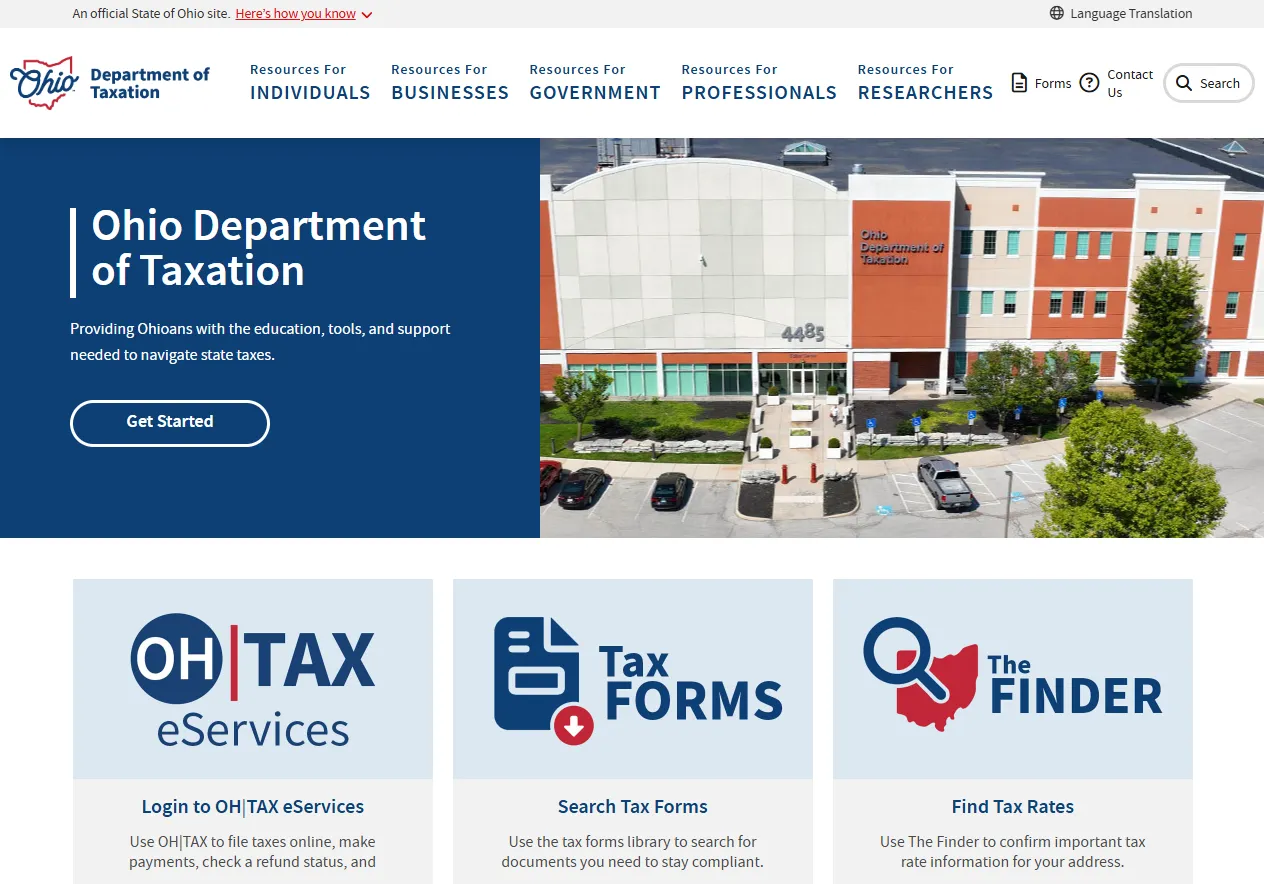
How Ohio Property Tax Works
Ohio property tax is local. The state provides laws, forms, resources and oversight, but the daily user tasks are usually handled by county offices. That is why the correct answer to “where do I pay Ohio property tax?” depends on the county.
| Task | Typical Office | What It Means for You |
|---|---|---|
| Search property record | County Auditor or Fiscal Officer | Use parcel number, owner name or address depending on county search tools. |
| Check assessed value | County Auditor | This is where market value, taxable value, property class and reappraisal/update information usually appear. |
| Pay tax bill | County Treasurer | The treasurer handles payment options, receipts, penalties, delinquent balances and many tax-collection questions. |
| Check due date | County Treasurer | Due dates vary by county, so do not rely on a statewide date. |
| File valuation complaint | County Board of Revision | If the value seems wrong, payment office staff usually cannot fix it; you may need a valuation complaint. |
| Apply for homestead exemption | County Auditor | Most homeowners apply through the county auditor where the property is located. |
Simple rule: Auditor/fiscal officer = property value, parcel search and exemption records. Treasurer = tax bill, payment, due date, receipt and delinquent balance.
How to Find an Ohio Property Tax Bill
The fastest way to find an Ohio property tax bill is to search at the county level. Some counties call the search tool “property search,” “real estate search,” “parcel search,” “tax bill search,” or “auditor property search.” Large counties may split auditor/fiscal officer search from treasurer payment search.
- Identify the Ohio county where the property is located.
- Open that county’s auditor, fiscal officer or property search page.
- Search by parcel number if you have it.
- If the parcel number is missing, search by property address or owner name where allowed.
- Confirm the property address, owner, tax district, value and parcel details before using the bill or payment link.
What you may see in an Ohio property record
The county parcel number identifies the property and is often required for bill lookup, payment and valuation complaints.
Check whether the owner and mailing address are current, especially after a sale, inheritance, trust transfer or mailing problem.
County auditor records usually show property value details used in tax calculation.
Local school, city, township, county and special district levies affect the final bill.
How to Pay Ohio Property Tax Online
Ohio property tax payments are made through the county treasurer or the official payment processor used by that county. Before paying, confirm the parcel, tax year, half-year bill, current balance, payment status and whether a mortgage escrow company already paid.
Payment warning: Card and online processor fees vary by county and processor. Review the final payment screen before submitting.
Ohio Property Tax Due Dates
Ohio due dates are not identical across all counties. Many counties collect real estate taxes in two halves, but the exact first-half and second-half deadlines are set locally and may change. Always use your county treasurer’s tax calendar, not a general statewide date.
| County Example | Due Date Pattern Shown by Official County Source | What Users Should Learn |
|---|---|---|
| Franklin County | Real estate first-half payment due February 28; second-half payment due July 20. | Large counties may publish a specific due-date FAQ or collection calendar. |
| Cuyahoga County | 2026 calendar listed first-half 2025 payable 2026 real estate taxes due February 19, with penalty date after that. | County calendar language often uses “tax year” and “payable year,” so read carefully. |
| Fairfield County | County treasurer page lists first-half and second-half real estate tax deadlines locally. | Smaller and mid-size counties also have their own treasurer due-date pages. |
| Washington County | County page lists first-half and second-half due dates for real estate and manufactured home taxes. | Manufactured home dates can differ from real estate dates. |
- Open your county treasurer’s official website.
- Look for “tax due dates,” “collection dates,” “real estate tax,” or “tax bill.”
- Confirm whether the date is first half, second half, manufactured home, prior-year or delinquent tax.
- If a deadline already passed, check penalty, interest and posted payment status before paying.
Tax Year vs Payable Year in Ohio
Ohio property tax bills can confuse new owners because the tax year and the year you pay may not match. Many county pages describe real estate taxes as being paid after the tax year. This matters during home purchases, escrow setup, prorations and seller credits.
The year the property value and tax obligation are tied to.
The year the tax bill is actually collected by the county treasurer.
A bill may relate to a period before you owned the property, but it still may be due after closing.
Always compare the tax bill with your closing statement, seller credit and escrow setup.
Property Value, Reappraisal and Triennial Updates
Your Ohio property tax bill depends heavily on value. Ohio counties go through full reappraisal and triennial update cycles. A reappraisal or update year can change the property value used in the tax system, which may affect the tax bill even if the owner did not make changes to the property.
- Open your county auditor property record.
- Compare prior value, current market value and taxable value.
- Check whether your county is in a reappraisal or triennial update year.
- Review recent sale price, property class, land value and building value.
- If the value appears wrong, review Board of Revision complaint rules before the filing deadline.
Value tip: A tax bill can increase because of value changes, voter-approved levies, local rates, tax district changes or loss of a credit/exemption. Do not assume the treasurer can fix a valuation problem.
Ohio Property Tax Exemptions and Credits
Ohio homeowners may see relief through programs such as Homestead Exemption, owner-occupied credit and non-business credit, depending on the property and owner eligibility. The exact application route is usually through the county auditor.
| Relief Type | Who Should Review It | Where to Start |
|---|---|---|
| Homestead Exemption | Senior homeowners, permanently and totally disabled homeowners, and certain qualifying surviving spouses or disabled veterans depending on rules. | County auditor homestead page and Ohio Taxation homestead resources. |
| Owner-Occupied Credit | Homeowners who own and occupy the property as their principal residence. | County auditor real estate or tax credit page. |
| Non-Business Credit | Qualifying residential and agricultural property, subject to levy and statutory rules. | County auditor tax bill or Ohio rollback explanation. |
| Disabled Veteran Homestead | Qualifying disabled veterans or surviving spouses under Ohio rules. | Ohio Department of Taxation forms and county auditor. |
- Open your county auditor’s homestead or real estate tax relief page.
- Confirm owner age, disability, veteran status, occupancy and income requirements where applicable.
- Check the deadline and documents required.
- File through the county auditor or official filing process for your county.
- After approval, confirm the credit/exemption appears on the tax bill.
How to Challenge an Ohio Property Value
If the problem is the property value, market value, classification or property facts, the issue usually starts with the county auditor and county Board of Revision, not the treasurer payment desk. The standard Ohio form for a value complaint is the Complaint Against the Valuation of Real Property.
- Open your county auditor’s Board of Revision or property value complaint page.
- Confirm the parcel number and current value.
- Gather evidence such as appraisal, comparable sales, purchase documents, photos or property record errors.
- Check the filing deadline for the tax year.
- If you disagree with a Board of Revision decision, review Ohio Board of Tax Appeals options and deadlines.
Appeal warning: Paying taxes and challenging value are separate tasks. Filing a complaint does not automatically remove payment responsibility.
New Ohio Homeowner Checklist
New owners often have the most confusion because Ohio tax bills may be tied to a previous tax year, seller credits may appear at closing, and escrow may or may not be set up correctly.
Mortgage Escrow and Ohio Property Tax
If your mortgage company pays taxes through escrow, you should still check the county record before the deadline. Escrow collection on your mortgage statement is not the same as a posted county payment.
- Search your property through the county treasurer or auditor portal.
- Open the current tax bill and payment status.
- Compare the due date with your mortgage escrow statement.
- If payment has not posted near the deadline, contact your mortgage servicer and ask for proof of payment.
- Do not pay personally until you know whether a servicer payment is pending.
Late, Delinquent or Unpaid Ohio Property Taxes
Late Ohio property taxes can lead to penalty, interest, delinquent-tax notices, tax lien issues or foreclosure-related steps depending on county rules and how long the balance remains unpaid. If your bill is late, check the county treasurer record first.
- Open the county treasurer’s official tax search or payment page.
- Confirm the parcel, tax year, half-year bill and unpaid balance.
- Check penalty and interest dates.
- Look for payment plan or delinquent-payment options if available.
- If you received a tax lien, foreclosure, bankruptcy or legal notice, contact the official office or qualified professional quickly.
Urgent note: Delinquent tax and tax lien situations can become legal and time-sensitive. Do not rely only on a general guide if you have a sale notice, foreclosure notice, bankruptcy case or court deadline.
Common Ohio Property Tax Mistakes to Avoid
Ohio property tax is county-based. Always search the county where the property is located.
Similar addresses, units and owner names can cause wrong-property payment mistakes.
County treasurers publish their own calendars. Check your county’s current date.
Your lender may collect escrow but payment still needs to post with the county treasurer.
The treasurer collects tax. Value problems usually start with the auditor or Board of Revision.
Homestead and owner-occupied credit rules may require timely application through the county auditor.
Documents to Keep
Good records make Ohio property tax issues easier to solve, especially after a purchase, mortgage escrow change, exemption filing, appeal or delinquent notice.
Parcel number, property address, tax bill PDF, payment coupon, receipt, confirmation number and bank record.
Closing statement, deed, escrow disclosure, seller tax credit, mortgage statement and mailing-address confirmation.
Proof of age, disability, veteran status, ownership, occupancy, income documents if required and prior approval letters.
Appraisal, comparable sales, photos, repair estimates, purchase agreement and property record corrections.
Related Property Tax Guides on This Site
These internal guides can help you understand property tax concepts before taking final action through your county’s official Ohio portal.
Official Ohio Property Tax Links
Use these official resources when you are ready to search, pay, file, appeal or verify account-specific property tax information.
Ohio Property Tax Office Map
Ohio property tax bills are handled by county offices, so you should not visit a state office to pay a local county bill. The map below is included only as a state reference point. For payment, receipts, tax bills, penalties or delinquent balances, use your county treasurer. For value, parcel records and many exemptions, use your county auditor or fiscal officer.
Editorial Trust and Update Notes
CountyPropertyTaxes.us is an independent informational guide. It is not the Ohio Department of Taxation, a county auditor, a county treasurer, a county board of revision or the Ohio Board of Tax Appeals. This page explains the process and helps users choose the correct official office before taking account-specific action.
Update checklist: county due dates, county treasurer payment options, county auditor search tools, reappraisal/update schedule, Homestead Exemption rules, valuation complaint forms, Board of Revision deadlines, tax penalty rules and official links should be reviewed whenever official Ohio or county pages change.
Ohio Property Tax FAQs
Where do I pay Ohio property tax?
Pay through the county treasurer for the county where the property is located. Ohio does not use one single statewide payment portal for all county property tax bills.
How do I search Ohio property tax records?
Start with the county auditor, fiscal officer or county property search page. Search by parcel number when available, or by address or owner name if the county tool allows it.
Are Ohio property tax due dates the same in every county?
No. Due dates vary by county. Many counties bill in two halves, but the exact first-half and second-half deadlines must be checked with the county treasurer.
Who handles Ohio property tax payments?
The county treasurer generally handles property tax billing, payment options, posted payment status, penalties, delinquent balances and receipts.
Who handles Ohio property value and parcel records?
The county auditor or fiscal officer generally handles parcel records, property value, property class, tax district information and many exemption records.
What is a parcel number?
A parcel number is the county identifier for a property. It is often needed for search, payment, exemptions, valuation complaints and tax bill lookup.
Why did my Ohio property tax bill increase?
A bill may increase because of reappraisal or triennial value updates, local levies, tax district changes, loss of a credit or exemption, or a prior-year/delinquent balance.
How often are Ohio property values updated?
Ohio counties follow reappraisal and triennial update cycles. Check the Ohio reappraisal schedule and your county auditor for your county’s current cycle.
What is the Ohio Homestead Exemption?
The Homestead Exemption is a property tax relief program for qualifying homeowners such as seniors, permanently and totally disabled homeowners, and certain other qualifying applicants under state rules.
Where do I apply for Ohio Homestead Exemption?
Most homeowners apply through the county auditor where the property is located. Check the county auditor’s homestead page for the form, deadline and documents.
Can I appeal my Ohio property value?
Yes, property owners may be able to file a valuation complaint with the county Board of Revision. If you disagree with a decision, Ohio Board of Tax Appeals may be part of the next step.
Should I pay taxes if I filed a valuation complaint?
Payment and appeal are separate issues. Filing a complaint usually does not automatically remove the responsibility to pay by the due date.
What if my mortgage company pays my Ohio property tax?
Check county payment status before the deadline. Escrow collection on a mortgage statement does not always mean the county treasurer has posted payment.
What if I just bought an Ohio home?
Search the parcel, compare the tax bill with your closing statement, confirm mailing address, check escrow setup and review owner-occupied or homestead eligibility if applicable.
What happens if Ohio property tax is late?
Late taxes can trigger penalties, interest, delinquent notices and other county collection steps. Check the county treasurer’s official balance and penalty schedule quickly.
Is CountyPropertyTaxes.us an official Ohio government website?
No. CountyPropertyTaxes.us is an independent informational guide. Final payment, filing, appeal and account-specific verification must be completed through official Ohio or county sources.
Bottom Line
For Ohio property tax, find the county first, confirm the parcel with the county auditor or fiscal officer, review the bill and value details, verify county due dates, check exemptions, then pay only through the county treasurer’s official system.
Find BillPay Property TaxCheck Due DatesReview ExemptionsOfficial Links