
Florida Property Tax Guide: Pay, Search, Due Dates & Exemptions
Florida property tax is simple only after you know which office handles which task. The state gives oversight and publishes rules, but your actual bill, online payment, parcel search, Homestead Exemption, tax certificate issue, or Value Adjustment Board appeal is handled locally through your county. This guide explains the process first, so you only open an official Florida or county website when you are ready to search, pay, file, appeal, or confirm an account-specific detail.
Quick Answer
Florida property tax is administered at the county level. Use your county property appraiser to search values, ownership, exemptions and assessment records. Use your county tax collector to pay the bill, download payment receipts, review delinquent taxes, and ask payment-specific questions. Use the Value Adjustment Board if you need to appeal value, exemption denial, classification, portability, or deferral decisions. Florida Department of Revenue provides statewide oversight and taxpayer guidance, but it does not replace the county office for your actual payment or parcel record.
Florida Property Tax Is County-Based: Use the Right Office
The biggest mistake in Florida property tax research is looking for one statewide payment or search portal. Florida does not work that way for most property-tax actions. Your county offices handle the practical work, and the Florida Department of Revenue provides oversight, forms, guides, data and rules.
| Task | Office to Use | What That Office Usually Handles | Official Route |
|---|---|---|---|
| Search property value, owner or parcel details | County Property Appraiser | Parcel search, assessed value, just value, exemptions, portability, classification and TRIM notice data. | Find County Officials |
| Pay property tax or download receipt | County Tax Collector | Tax bills, online payments, mailed payments, installment plan, delinquent taxes, tax certificates and payment receipts. | Find Tax Collector |
| Appeal value or exemption denial | Value Adjustment Board / Clerk | Petitions about value, exemptions, classifications, tax deferrals, portability and change of ownership/control issues. | VAB Guidance |
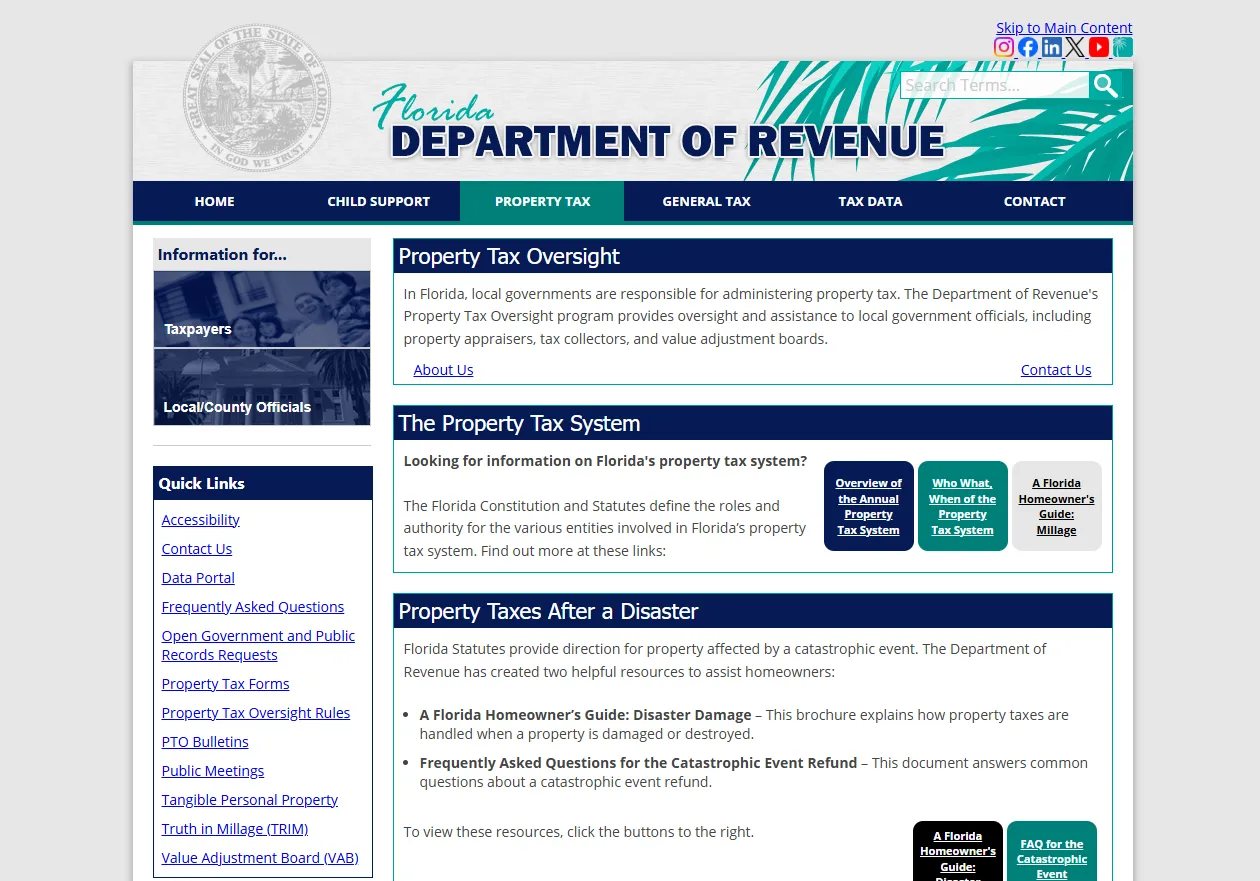
| Understand statewide rules | Florida Department of Revenue | Property tax oversight, forms, taxpayer guides, data portal, training and official publications. | Florida DOR Property Tax |
- Open Florida DOR’s local officials page.
- Select your county.
- Choose the property appraiser for assessment, owner, parcel and exemption questions.
- Choose the tax collector for bill, payment, receipt, installment, delinquent and tax-certificate questions.
- Choose the VAB or clerk route for appeals.
How to Pay Florida Property Tax
Florida property tax bills are paid through the county tax collector, not a single statewide payment site. Payment options vary by county, but most counties provide online payment, mailed payment, in-person payment, and receipt lookup. Before paying, verify the parcel, tax year, amount due, discount period, mortgage escrow status and any delinquent balance.
| Payment Method | Best For | What to Check First | Where to Act |
|---|---|---|---|
| Online payment | Fast payment, receipt download and last-minute review. | Card/eCheck fee, tax year, parcel, amount and escrow status. | County tax collector website. |
| Mail payment | Check payments and owners who prefer paper records. | Postmark rules, payment coupon, parcel number and correct mailing address. | County tax collector bill instructions. |
| In-person payment | Complex balances, receipt needs or payment-proof questions. | Office hours, accepted payment methods, ID/document requirements. | County tax collector office. |
| Installment plan | Owners who qualify and want scheduled payments. | Application deadline, installment amount, discount and missed-payment rule. | County tax collector; DOR forms may apply. |
Do not double pay: If your mortgage company normally pays from escrow, confirm posted payment or scheduled payment with the county tax collector and your servicer before paying personally.
How to Search Florida Property Tax Records
Florida property search is county-specific. The county property appraiser site is usually best for ownership, parcel, value, exemptions and assessment history. The county tax collector site is usually best for bill amount, payment status, receipts, delinquent taxes and tax certificate information.
| Search Type | Use This Office | Search Inputs You May See | Best Use |
|---|---|---|---|
| Parcel or property record search | County Property Appraiser | Address, owner name, parcel ID, folio, strap, alternate key or legal description. | Value, exemptions, owner record, land/building details and TRIM information. |
| Tax bill search | County Tax Collector | Account number, parcel ID, tax bill number, owner name or address. | Pay tax, download receipt, confirm delinquency or check installment status. |
| Appeal search | VAB / Clerk | Petition number, parcel ID, owner name or case status. | Track value, exemption, classification, deferral or portability disputes. |
| Statewide data | Florida DOR Data Portal | Published reports, tax roll data, millage and valuation datasets. | Research trends, not individual payment action. |
- Find your county property appraiser for parcel, value and exemption records.
- Find your county tax collector for bill, payment and receipt records.
- Use the VAB or clerk site only if you are appealing or tracking a petition.
- Use the Florida DOR Data Portal for statewide reports and tax roll datasets.
Florida Property Tax Due Dates, Discounts and Calendar
Florida property tax timing is important because paying early can save money and paying late can create delinquency problems. Specific county websites should always be checked, but statewide DOR taxpayer guidance and calendars explain the typical Florida property tax year.
| Timing | What Usually Happens | Why It Matters | What To Do |
|---|---|---|---|
| January 1 | Date of assessment. | Ownership, residence status and property condition on this date can matter for value and exemptions. | Keep January 1 status in mind for Homestead and classification issues. |
| March 1 | Deadline to file with the county property appraiser for exemptions or agricultural/other classifications. | Missing this date can delay or complicate benefits. | File Homestead or other exemption/classification applications early. |
| August | Property appraiser mails TRIM notice. | This is your warning notice for proposed value and taxes before the bill. | Review value, exemptions, classification and appeal deadlines. |
| November | Tax collector sends tax bills. | Payment season begins and early-payment discounts may apply. | Search the county tax collector bill and verify escrow. |
| March 31 | Last day to pay before April delinquency in the typical cycle. | Unpaid taxes may become delinquent after this date. | Confirm posted payment before the deadline. |
| April 1 | Unpaid taxes generally become delinquent. | Delinquency can lead to additional charges and tax certificate activity. | Contact the county tax collector quickly if unpaid. |
Early payment discount months
Florida’s typical early-payment discount structure rewards faster payment. Always confirm your county bill, but the common pattern is 4% in November, 3% in December, 2% in January, 1% in February, and no discount in March.
- Open the Florida DOR tax collector calendar or taxpayer page.
- Compare the statewide timing with your county bill.
- Confirm discount period, installment plan rules and delinquency timing with the county tax collector.
Florida Property Tax Exemptions and Benefits
Florida property tax exemptions are handled through the county property appraiser. The most searched benefit is Homestead Exemption, but Florida also has Save Our Homes, portability, senior benefits, disability benefits, veteran benefits, active-duty military benefits, disabled first responder benefits and other special-use classifications.
- Open your county property appraiser website.
- Search the property record.
- Check whether Homestead or other exemptions already appear.
- Review eligibility and required documents.
- File before March 1 when a deadline applies.
- Save the confirmation and monitor approval or denial notices.
| Benefit | Who Should Review | What It Can Affect | Where to File |
|---|---|---|---|
| Homestead Exemption | Florida homeowners using the property as their permanent residence. | Taxable value and qualification for Save Our Homes protections. | County property appraiser. |
| Save Our Homes | Homestead property owners after the first qualifying year. | Annual assessed-value increase limits for qualifying homestead property. | Applied through homestead status/property appraiser records. |
| Portability | Homeowners moving from one Florida homestead to another. | Transfer of some Save Our Homes benefit to a new homestead. | County property appraiser for the new homestead. |
| Senior benefits | Owners age 65 or older where local senior exemptions are adopted. | Additional homestead savings where county/municipal rules allow. | County property appraiser. |
| Disability benefits | Owners with qualifying disability status. | Additional exemption or tax benefit depending on qualification. | County property appraiser. |
| Veteran and military benefits | Veterans, disabled veterans, surviving spouses or active-duty military members who may qualify. | Exemptions, discounts or other benefits based on status and documentation. | County property appraiser. |
Important: A benefit may be statewide, local-option, or tied to county/municipal adoption. Always confirm eligibility and filing rules with the county property appraiser where the property is located.
Florida Property Tax for New Homebuyers
New buyers often get surprised because Florida property taxes can change after a sale. The prior owner’s exemption, Save Our Homes cap, escrow estimate, or seller credit may not match your first full tax year as owner. A closing statement is not the same thing as a county tax bill.
- Open the Florida DOR first-time homebuyer property tax guide.
- Review reassessment, Homestead Exemption and Save Our Homes timing.
- Then verify your county property appraiser and tax collector records.
TRIM Notice, Property Value Disputes and VAB Appeals
The TRIM notice is not the tax bill. It is the Notice of Proposed Property Taxes and it gives you time to review proposed value, exemptions, classification and taxing authority budget information before the final tax bill. If you disagree with value or a denied exemption/classification/deferral/portability decision, the Value Adjustment Board route may apply.
| Issue | Where to Start | Important Timing | Practical Step |
|---|---|---|---|
| Value seems too high | County property appraiser. | VAB value petitions are tied to TRIM notice timing. | Review comparable sales, property facts and deadline before petitioning. |
| Exemption denied | Property appraiser denial notice. | Petition deadlines can run from denial letter mailing. | Gather proof of residence, age, disability, veteran status or other eligibility. |
| Portability issue | County property appraiser. | Portability disputes may be VAB-related. | Keep prior homestead and new homestead records together. |
| Tax bill already issued | Tax collector for payment; VAB for petition status. | Appeal does not remove the need to handle payment rules. | Check payment requirement before taxes become delinquent. |
- Review your TRIM notice or denial letter.
- Contact the property appraiser first if you need clarification.
- Check the Value Adjustment Board deadline for your county.
- File with the VAB clerk if you decide to petition.
- Do not ignore payment timing while an appeal is pending.
Late, Delinquent Taxes, Tax Certificates and Tax Deed Risk
Unpaid Florida property taxes can move from a simple late balance into delinquency and tax-certificate activity. The county tax collector controls payment records and delinquency processes. If you receive a delinquent notice, tax certificate notice, tax deed notice or legal-looking document, verify the county record before taking action.
- Search the county tax collector record by parcel, account number, owner or address.
- Confirm tax year, amount, interest/fees and delinquent status.
- Check whether a tax certificate has been issued or is scheduled.
- Save all notices, payment confirmations and receipt records.
- Contact the county tax collector quickly if you see sold taxes, certificate activity or tax deed warnings.
Urgent note: Tax certificate, tax deed, foreclosure, bankruptcy, probate or estate situations can become legally time-sensitive. Use official county records and qualified professional help if a deadline or legal notice is involved.
Florida Property Tax Installment Plan
Some Florida taxpayers may use an installment payment plan through the county tax collector. This is not the same as simply paying late or splitting a bill informally. There are application rules, payment dates, discount rules and consequences if installments are missed.
- Check your county tax collector installment plan page.
- Review the official application deadline.
- Confirm whether your property and tax amount qualify.
- Understand each installment due date and discount.
- Keep confirmation that your plan was accepted.
Tangible Personal Property Tax in Florida
Florida property tax is not only about houses and land. Businesses may also deal with tangible personal property tax on furniture, fixtures, equipment and other business assets. This is handled through the county property appraiser and can have different filing requirements from real estate taxes.
| Property Type | Who It Affects | Office | What To Watch |
|---|---|---|---|
| Real property | Homeowners, landowners, commercial property owners and investors. | Property appraiser for value/exemptions; tax collector for payment. | TRIM notice, bill, discounts, delinquency and exemptions. |
| Tangible personal property | Businesses and owners of taxable business assets. | County property appraiser for return/assessment; tax collector for bill/payment. | DR-405 return timing, exemptions and business asset reporting. |
| Special classifications | Agricultural, conservation, historic or other special-use property owners. | County property appraiser. | Application deadlines, continued use and documentation. |
Common Florida Property Tax Mistakes to Avoid
These mistakes create confusion for homeowners, buyers, snowbirds, investors, heirs, business owners and escrow borrowers.
Florida property tax bills are paid through the county tax collector, not one statewide payment checkout.
Homestead and other classifications often depend on timely county property appraiser filing.
The TRIM notice helps you review proposed taxes and appeal timing; the tax collector bill comes later.
Mortgage escrow collection is not the same as county tax collector posting payment.
A seller’s capped tax history may not match your future tax bill after purchase.
Unpaid taxes generally become delinquent April 1 in the typical cycle, so waiting can add risk and cost.
Documents to Keep Before You Pay or File
Good records make Florida property tax problems easier to solve, especially when escrow, exemption, new-buyer, appeal or delinquent-tax issues appear.
Parcel ID, property appraiser record, TRIM notice, legal description and mailing address record.
Tax bill, receipt, confirmation number, bank record, check image, postmark proof and tax collector statement.
Florida driver license or ID, voter registration, vehicle registration, proof of residence, age, disability, veteran or income records when needed.
TRIM notice, denial letter, property record, photos, comparable sales, petition copy and VAB correspondence.
Related Property Tax Guides on This Site
These internal guides help explain general property-tax concepts before you take county-specific action in Florida.
Official Florida Property Tax Links
Use these official sources when you are ready to take final action, verify current rules, find your county office, or review taxpayer guidance.
Editorial Trust and Update Notes
CountyPropertyTaxes.us is an independent informational guide. It is not the Florida Department of Revenue, a county property appraiser, county tax collector, clerk of court, or Value Adjustment Board. This page explains the process and helps users reach the correct official office for account-specific action.
Update checklist: county official lookup, taxpayer guidance, exemption rules, Homestead timing, payment calendar, installment application rules, delinquency timing, VAB appeal timing, Data Portal links, first-time homebuyer guidance and official PDF links should be reviewed whenever Florida DOR or county pages change.
Florida Property Tax FAQs
Where do I pay Florida property tax?
You usually pay through your county tax collector. Florida property tax bills and receipts are county-based, not handled through one statewide payment portal.
How do I search Florida property tax records?
Use your county property appraiser for parcel, value, ownership and exemption records. Use your county tax collector for bill, payment and receipt records.
What is the Florida property tax due date?
Florida property taxes are usually payable after tax bills are sent in November, and unpaid taxes generally become delinquent April 1 in the typical cycle. Always confirm with your county tax collector.
What are Florida property tax discount months?
The common early-payment discount pattern is 4% in November, 3% in December, 2% in January, 1% in February and no discount in March, but county bill instructions should be checked.
Who handles Florida Homestead Exemption?
The county property appraiser handles Homestead Exemption applications and exemption records for property located in that county.
What is the deadline for Florida Homestead Exemption?
March 1 is the key deadline for many Florida property tax exemptions and classifications. File early with your county property appraiser.
What is Save Our Homes in Florida?
Save Our Homes is an assessment limitation connected to Florida homestead property. It can limit annual assessed-value increases after a qualifying homestead is established.
Can I transfer my Florida Homestead Exemption?
The exemption itself does not simply transfer like a bill, but portability may allow some Save Our Homes benefit to move to a new Florida homestead if rules are met.
What is a TRIM notice?
A TRIM notice is the Notice of Proposed Property Taxes. It is not the final tax bill, but it shows proposed value and tax information before the final bill.
How do I appeal a Florida property value?
Start by reviewing the TRIM notice and contacting the county property appraiser. If needed, file a petition with the county Value Adjustment Board before the deadline.
Do I still pay taxes if I file a VAB appeal?
Do not ignore payment timing. Florida guidance says taxpayers should still handle required payment before taxes become delinquent, usually April 1.
What happens if Florida property taxes are late?
Unpaid taxes generally become delinquent April 1 in the typical cycle and may lead to additional charges, tax certificate activity and further collection steps.
Who handles delinquent Florida property taxes?
The county tax collector handles delinquent property tax payment records, notices, tax certificate issues and payment instructions.
What if my mortgage company pays my Florida property tax?
Check the county tax collector record before paying yourself. Escrow collection by a lender is not the same as posted payment with the county.
Why did my Florida property tax bill increase after buying a house?
A new buyer’s bill may change because prior-owner exemptions, Save Our Homes caps, reassessment after sale and escrow estimates may not match the new owner’s first full tax year.
Does Florida have senior property tax benefits?
Some senior benefits depend on statewide rules and local adoption by county or municipality. Check with the county property appraiser for eligibility and filing instructions.
What is tangible personal property tax in Florida?
It can apply to business assets such as equipment, furniture and fixtures. Businesses should check county property appraiser filing rules and DR-405 requirements.
Is CountyPropertyTaxes.us an official Florida tax website?
No. This is an independent informational guide. Final payments, filings, appeals and account-specific records must be handled through official Florida or county websites.
Bottom Line
For Florida property tax, first identify the county. Use the property appraiser for value, parcel records and exemptions. Use the tax collector for bills, payments, receipts, installment plans and delinquent taxes. Use the VAB or clerk for appeals. Use Florida DOR pages to understand the statewide rules before taking official action.
Find County OfficeHow to PaySearch RecordsDue DatesExemptionsOfficial Links